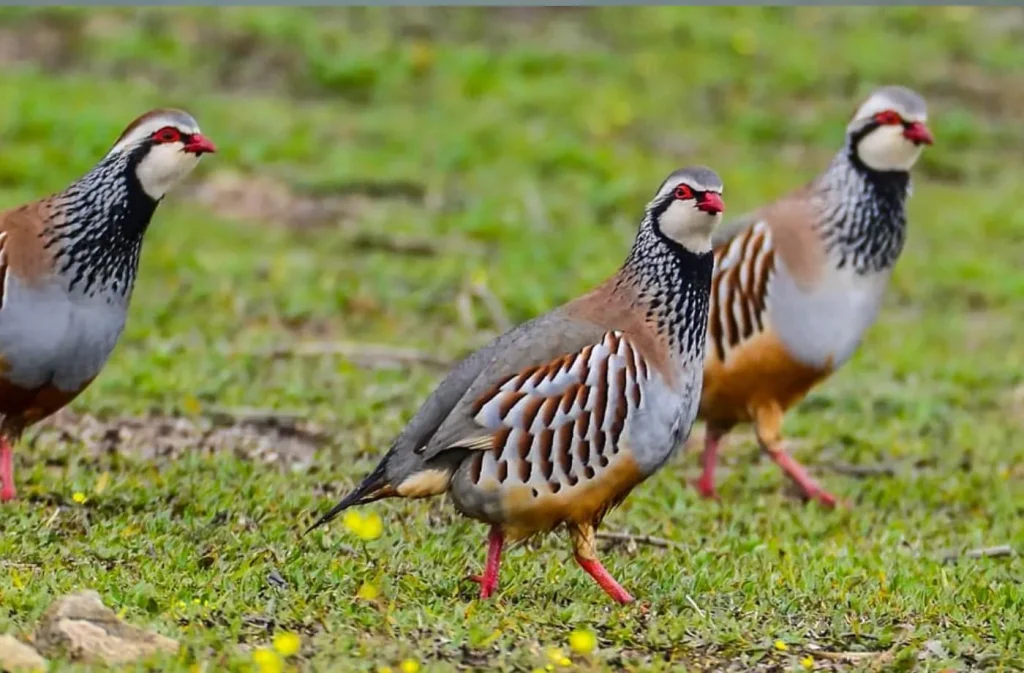
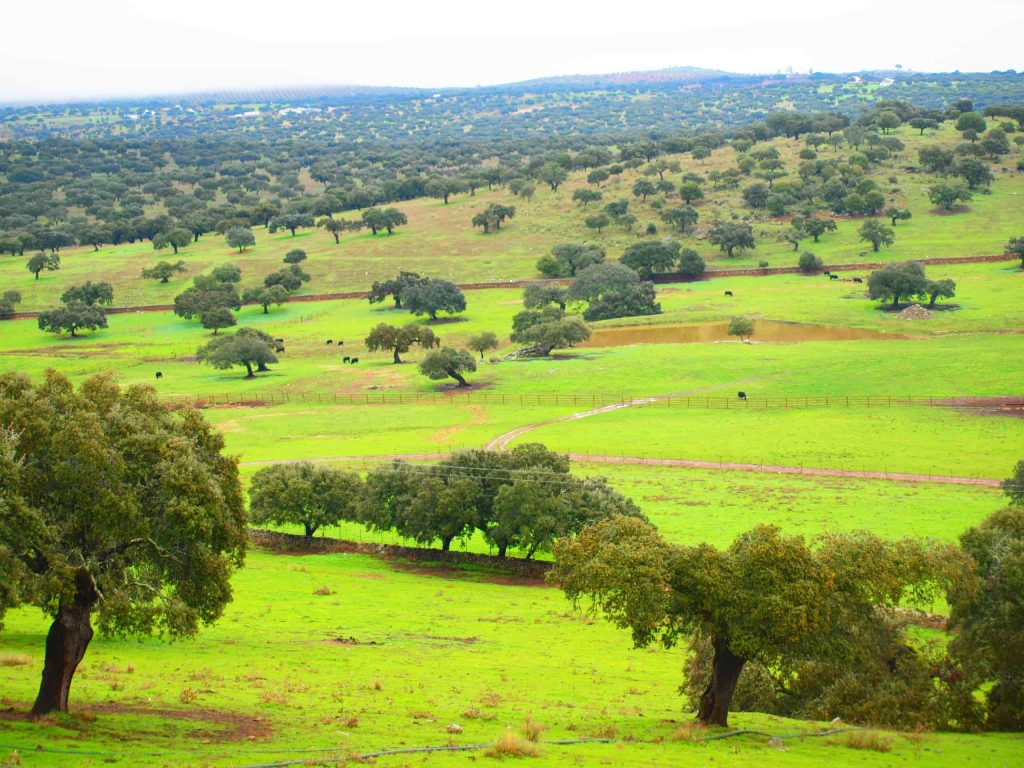
Driven partridge shooting places the Guns at fixed, numbered positions while a coordinated line of beaters guides red-legged partridges towards them. In Spain, this traditional format is known as an ojeo de perdices. The terrain, wind and organisation of each drive shape the birds’ height, speed and line.
At El Despeñadero, a family-run estate and bird hunting lodge in Spain near Toledo, the quarry is red-legged partridge. Trained dogs work with the picking-up team to locate and retrieve shot birds rather than searching for game in front of each Gun, and once the last drive is over, guests return to the lodge to dine and rest before the next day in the field.
Driven shooting in plain English
In driven shooting, the people moving the birds and the people shooting have separate roles. The Guns wait at their allocated pegs while beaters advance through the designated ground under the direction of the shoot team. Their movement encourages birds to leave cover and cross the line. The precise organisation varies by country, quarry and estate, but the fixed shooting line is the defining feature.
The term is also used for pheasant and grouse shooting, which can lead first-time visitors to assume that every driven day is alike. A Spanish partridge shoot is shaped by a different bird, landscape and tradition. Red-legged partridges are fast, agile and able to use ridges, valleys and wind to alter their line, creating a distinctive sporting test.
How a Spanish “ojeo de perdices” works
Ojeadores, the Spanish beaters, begin on the far side of a planned drive and move towards the Guns. Their spacing, pace and direction are coordinated so that the birds are guided rather than chased at random. Natural features do much of the work: vegetation provides holding cover, slopes influence the birds’ route, and the wind changes how they approach the line.
The word ojeo can refer both to the method and to one individual drive. A full shooting day normally contains several ojeos in different parts of the estate. The Guns rotate between positions so that each guest sees the ground from more than one angle and opportunities are distributed across the team.
The team behind each drive
| Role | Responsibility during the day |
|---|---|
| Gun | Shoots from the assigned peg and follows the stated safety rules and permitted arcs. |
| Host or shoot captain | Explains each drive and coordinates the Guns loaders beaters and recovery team. |
| Ojeador or beater | Moves through the ground to guide partridges towards the shooting line. |
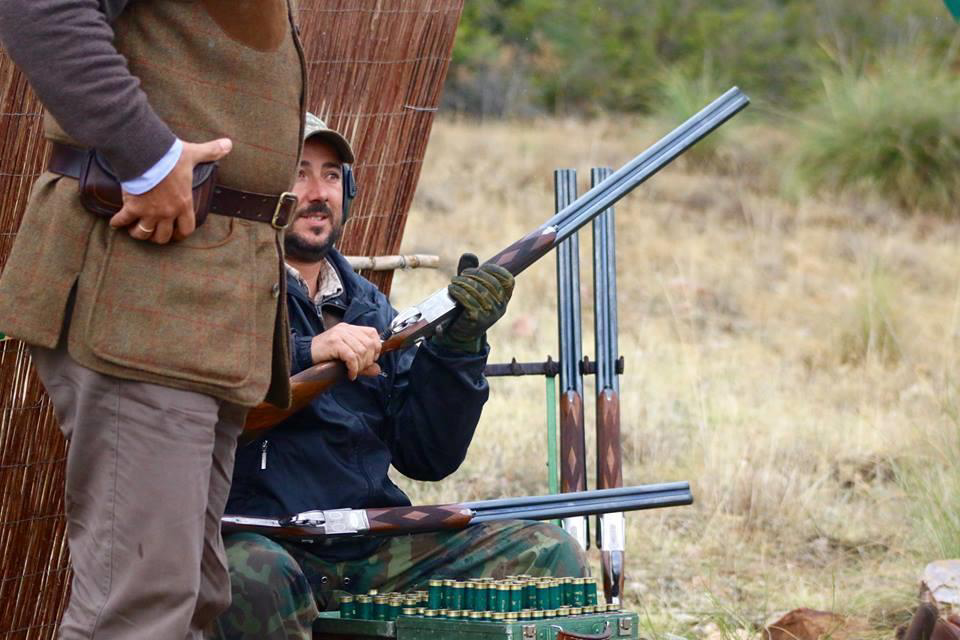
| Loader | Supports the Gun with cartridges and gun handling under the agreed arrangement. |
| Picker-up | Marks where birds fall and organises prompt recovery behind the line. |
| Gundog | Finds and retrieves shot or wounded birds under the handler’s direction. |
These roles are related but not interchangeable. Beaters present the birds; they are not part of the shooting line. Loaders assist individual Guns, while pickers-up concentrate on what happens after the shot. Dogs support recovery and bird welfare. Their presence does not turn an ojeo into a walked-up day over dogs.
Why the shooting positions are called pegs
A peg is the numbered position assigned to one Gun for a particular drive. It gives the line a clear structure and makes the location of neighbouring Guns unambiguous. Before shooting begins, the host explains the safe arc, the expected direction of the birds and any roads, buildings, staff or other features that affect the position.
Peg numbers are normally drawn and then rotated between drives according to an agreed system. The change is important because the character of the presentation can vary sharply across the same line. A position in a valley may show quick crossing birds, while a peg higher on the ground may receive a different height, background and wind.
A typical driven partridge day
Every estate has its own rhythm, but the practical sequence is broadly recognisable. Guests receive the day’s briefing, draw their pegs and travel to the first drive. The field team confirms when everyone is in position and when the drive may begin. No one moves on until the guns are safe and the organisers have completed the immediate recovery work.
- Arrival and briefing on safety the ground weather and planned programme.
- Drawing of pegs and transport to the first part of the estate.
- Positioning of the Guns while the beaters assemble at their starting line.
- The ojeo itself with birds presented according to the ground and conditions.
- Recovery by pickers-up and dogs once the drive has ended.
- Rotation to new pegs with refreshments or lunch arranged between drives.
El Despeñadero’s published example includes four drives, refreshments in the field, lunch during the shooting programme and dinner at the lodge. It is a useful guide to the shape of the experience, although the final itinerary will depend on the booked dates, conditions and requirements of the group.
Driven shooting and walked-up shooting compared
| Point of difference | Driven day | Walked-up day |
|---|---|---|
| Position of the Guns | Stationary at numbered pegs | Moving through the ground |
| How birds are found | Presented by a coordinated line of beaters | Flushed as the party advances often with dogs |
| Physical demand | Limited walking for the Guns between positions | Continuous movement over the terrain |
| Role of dogs | Principally recovery behind the line | May search flush point and retrieve depending on the format |
| Organisation | Formal drives with a host peg draw and field team | Smaller moving party with a different safety structure |
Neither format is simply a faster version of the other. They organise the Guns, dogs and quarry in fundamentally different ways. A travelling guest should know which kind of day has been booked because the required fitness, clothing, etiquette and expectations are not the same.
The role of dogs at El Despeñadero
Dogs are essential to prompt and thorough recovery. Working with experienced pickers-up behind the shooting line, they use scent to find birds that may have fallen into scrub, grass or broken ground. If a wounded bird travels away from the point of impact, the Gun should clearly indicate its direction to the loader or recovery team.
They are not used as personal hunting dogs in front of each peg. The Guns remain stationary and the ojeadores are responsible for moving the partridges towards the line. Keeping those functions clear accurately reflects how the estate’s driven partridge days operate and avoids confusing the experience with rough or walked-up shooting.
The El Despeñadero experience
El Despeñadero organises driven partridge shooting on a private estate near Toledo. Almost 2,000 hectares and a varied selection of drives allow the team to choose presentations suited to the experience and expectations of each group. The estate is family-run and has more than 40 years of experience welcoming shooting parties.
For an overseas visitor, a successful day depends on much more than arriving at the first peg. Transfers, licences, insurance, firearms, cartridges, loaders, accommodation and meals all need to be coordinated. The aim is to settle those details before travel so that the guests can concentrate on the sporting programme once they reach the estate.
The estate’s complete shooting service explains the arrangements that can be included. The precise services and itinerary should always be confirmed for the individual booking.
Safety and etiquette on the peg
The host’s briefing and the rules given on the day take priority over any general guide. A Gun must identify neighbouring positions, understand the permitted arc and assess the background before loading. A low bird, an uncertain line or any shot that could endanger another peg is always left. Proper eye and hearing protection should be worn throughout the drive.
- Keep the gun broken or otherwise safe until the start of the drive is confirmed.
- Never allow the muzzles to pass across another person when turning or changing guns.
- Shoot only clearly presented birds within the safe arc explained at the peg.
- Stop immediately when the end of the drive is signalled.
- Do not enter the recovery area unless invited by the shoot team.
- Report the line of any wounded bird so the pickers-up and dogs can respond promptly.
What to confirm before travelling
Ask how many shooting days and drives are planned, how large the team will be and whether a loader is included for each Gun. Confirm the arrangements for guns and cartridges, the expected dress code and the likely weather. Licensing and insurance requirements should be settled before flights or other travel are booked.
The organiser should also know the team’s experience level. Guests who are new to Spanish red-legged partridge may benefit from a different briefing or selection of drives from a group accustomed to fast, high birds. Good planning does not reduce the challenge; it makes the challenge safe, suitable and properly understood.
Would you like to take part in an ojeo de perdices in Spain? Contact El Despeñadero to discuss your dates, team, travel requirements and complete shooting programme.
Frequently asked questions
What does driven shooting mean
It means that beaters move game towards a stationary line of Guns at fixed pegs. The Guns do not advance across the ground to search for the birds.
What is an ojeo de perdices
It is the traditional Spanish form of driven red-legged partridge shooting. Ojeadores guide the birds towards the line, while the contours of the ground and the wind influence their presentation.
Do the dogs hunt in front of the Guns
No. On El Despeñadero’s driven days, trained dogs work with the picking-up team to locate and retrieve shot or wounded birds behind the line.
Can a first-time visitor take part
Yes, provided the organiser understands the guest’s experience and plans the briefing, loaders and drives accordingly. Every participant must already be competent in safe shotgun handling.
Sources
- BASC guide to types of game shooting Definitions of driven and walked-up shooting and the roles of beaters and pickers-up.
- El Despeñadero shoots Current description of the estate’s driven partridge experience.
- El Despeñadero home page Estate experience services and example programme.
- El Despeñadero 360 services Travel paperwork firearms cartridges loaders accommodation and hospitality.
- BASC guidance for loaders Safety guidance including eye and hearing protection.